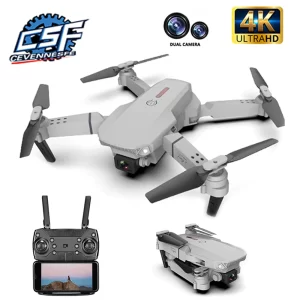
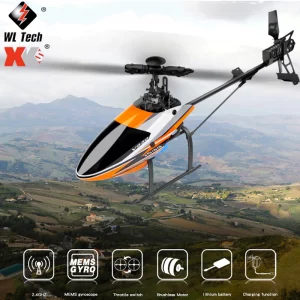
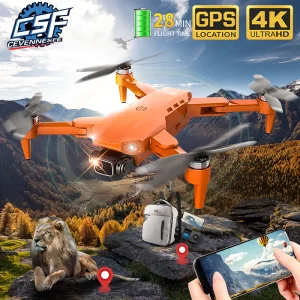
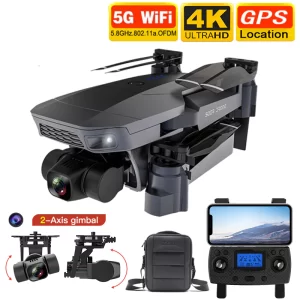
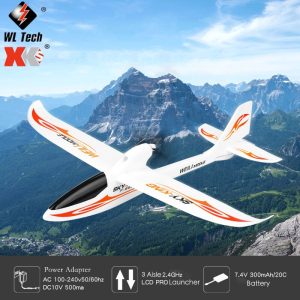
With the popularity of the Internet, the craze for drones(UVAs) continues to heat up. Now that aerial footage and photos are everywhere online, the drone trend is unstoppable. However, for many newbies, they may only know the term “drone”, and they still know little about it. Today, I will give you some corresponding introductions to the structural composition of drones!
The load-bearing structure of the UAV – the rack.
The rack refers to the carrier platform of the drone, and all equipment is carried by the rack to fly to the sky. Therefore, the quality of the drone rack largely determines whether the drone is good or not. To measure the quality of a rack, it can be inspected from the aspects of firmness, ease of use, and reasonable component installation.
The pilot of the drone – flight control.
Flight control refers to the flight control system of the UAV. The main function is to automatically maintain the normal flight attitude of the aircraft. The flight control of the drone is equivalent to the role of the driver in the manned aircraft. Generally, it includes three major parts: sensors, airborne computers, and servo actuating equipment. The functions realized mainly include UAV attitude and control, UAV mission equipment management and emergency control.
The core part of the drone – the power system.
The power system of the UAV is mainly based on the electric motor. The electric power system mainly includes the motor, ESC, propellers and batteries.
(1)Motor: refers to a converter that converts electrical energy into mechanical energy. It consists of the main parts of stator, rotor, iron core and magnetic steel. Motors are divided into brushed motors and brushless motors. The motors of drones are mainly brushless. One end is fixed on the motor base of the frame arm, and the other end is fixed on the propeller, which generates downward thrust through rotation.
(2)ESC: refers to the electronic governor. Its main function is to convert the control signal of the flight control board into the size of the current to control the speed of the motor.
(3)Propeller: refers to the device that converts the rotational power of an engine into propulsion or lift. The propeller has two important parameters, the diameter of the propeller and the distance of the screw. The unit of diameter is in inches and the unit of pitch is in millimeters. The 8045 propellers we usually refer to are those with a diameter of 8 inches and a pitch of 45 mm.
(4)Battery: The battery on the drone is generally a high-rate lithium polymer battery. It is characterized by high energy density, light weight, and high resistance to current.
The control equipment of the drone – remote control
The drone remote control is a tool to control the drone. Therefore, the improvement of drone remote control has always been in the direction of convenient operation of the drone. The remote control generally includes basic devices such as switch keys and remote control antennas. The remote control channel refers to the number of actions that can be controlled by the remote control. Generally, the number of motions to be controlled by the four axes in the control process are: up and down, left and right, front and rear, and rotation. So the minimum is 4 channel remote control.
Aerial Stabilizer—Camera Gimbal
Nowadays, drones are basically equated with aerial photography. Therefore, the gimbal is an essential component. The main function of the gimbal is to prevent the shooting picture from shaking. The aerial photography gimbal generally senses the movement of the body through the sensor and keeps the camera in the original position through the motor drive to offset the impact of the body shake or vibration.