The retail industry is on the brink of a transformative revolution with the integration of commercial drones into supply chain and inventory management operations. These unmanned aerial vehicles (UAVs) offer retailers a unique opportunity to streamline processes, enhance efficiency, and provide exceptional customer experiences. In this article, we explore the future of commercial drones in retail, highlighting their potential to revolutionize supply chain logistics, inventory management, and last-mile delivery.
Streamlining Warehouse Operations:
Commercial drones have the potential to revolutionize warehouse operations in retail. With their ability to autonomously navigate vast storage facilities, drones can significantly improve inventory management processes. Equipped with barcode scanners or RFID technology, drones can efficiently conduct inventory checks, locate specific products, and update inventory records in real-time. This automation minimizes human error, reduces the time required for manual stocktaking, and ensures accurate inventory levels, enabling retailers to optimize their supply chain and minimize stockouts.
Efficient Last-Mile Delivery:
The future of retail delivery lies in the hands of commercial drones. These aerial vehicles can revolutionize last-mile delivery, overcoming traffic congestion and reducing delivery times. By deploying drones to deliver packages, retailers can provide faster and more convenient delivery options to customers, particularly in urban areas. Drones can navigate complex routes, avoid obstacles, and reach their destinations with precision. This efficient delivery method enhances customer satisfaction, reduces delivery costs, and opens up new possibilities for same-day or on-demand delivery services.
Inventory Tracking and Monitoring:
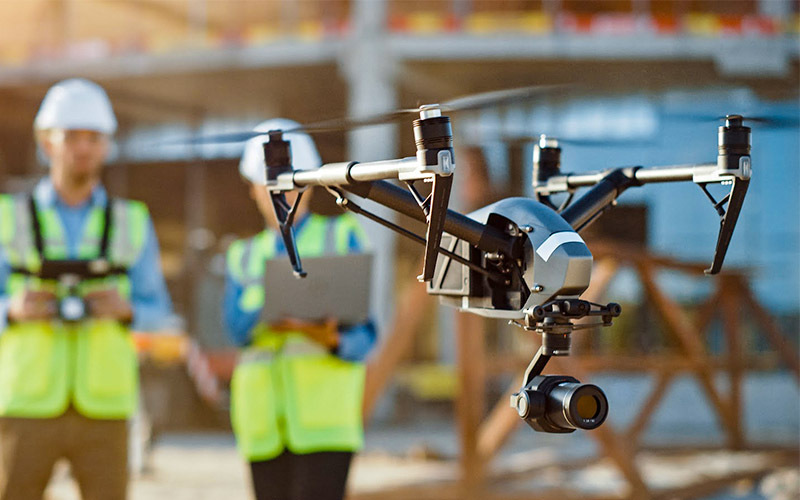
Monitoring and tracking inventory across multiple retail locations can be a time-consuming task. However, commercial drones can simplify this process by conducting aerial surveillance of retail stores or warehouses. Equipped with cameras and sensors, drones can capture real-time footage and monitor inventory levels, detect stock discrepancies, and identify shelf gaps or misplaced items. This data can be integrated into inventory management systems, enabling retailers to make data-driven decisions, optimize stock allocation, and ensure efficient replenishment.
Enhanced Store Merchandising:
Commercial drones offer exciting possibilities for improving store merchandising in the future. Drones equipped with cameras can capture aerial footage of store layouts and product displays, providing valuable insights into store performance and customer behavior. Retailers can analyze this data to optimize store layouts, planogram placement, and promotional displays. Drones can also assist in real-time shelf monitoring, ensuring products are properly stocked, shelves are organized, and promotional materials are in place. These applications enhance the overall shopping experience, improve product visibility, and increase sales opportunities.
Security and Loss Prevention:
The use of commercial drones in retail goes beyond operational efficiencies. Drones can play a significant role in security and loss prevention strategies. Equipped with advanced video surveillance capabilities, drones can monitor large retail premises, parking lots, and warehouses, providing a bird’s-eye view of the surroundings. This proactive surveillance helps deter theft, detect suspicious activities, and facilitate rapid response to security incidents. Drones can also conduct routine perimeter checks and identify potential vulnerabilities, ensuring the safety and security of retail facilities.
Conclusion:
The future of commercial drones in retail holds immense potential for transforming supply chain and inventory management. As drones continue to evolve, retailers can expect increased automation, improved data analytics, and enhanced integration with existing systems. By leveraging drones to streamline warehouse operations, expedite last-mile delivery, optimize inventory management, enhance store merchandising, and improve security measures, retailers can stay ahead in a highly competitive industry. Embracing these transformative technologies will pave the way for more efficient supply chains, elevated customer experiences, and greater success in the retail landscape.