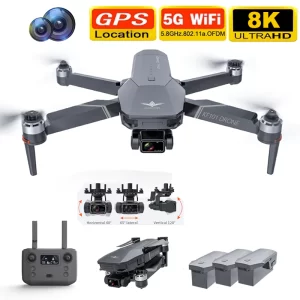
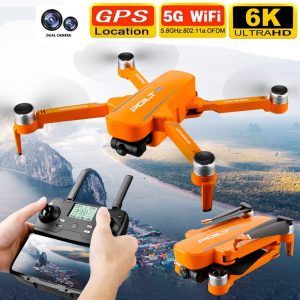
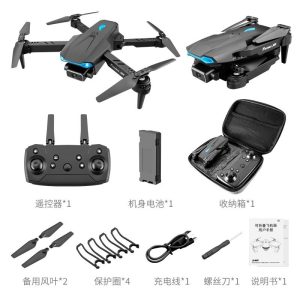
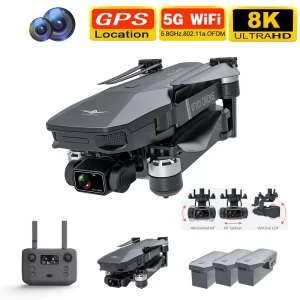
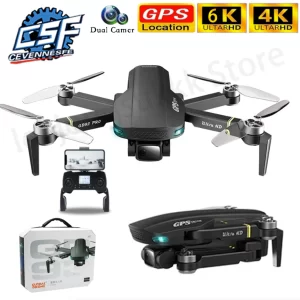
Whether it is drones or model airplanes, the public almost calls them drones now, which makes the boundaries between the two more and more blurred… Drones were first developed after World War I, and after World War II, they had more common military applications. In recent years, unmanned aerial vehicles have also begun to emerge for commercial and civilian use. UAV technology is becoming more and more mature and popular. Drones and model airplanes can be seen everywhere in major shopping malls. As a drone practitioner or enthusiast, can you now accurately tell the difference between the three?
The difference between UAV and model aircraft:
We will sort out the difference between the two from the aspects of the definition, flight control system, automatic control, composition, and use so that everyone can fundamentally distinguish them.
1.Different definitions
At present, our definition of an aircraft model is that the aircraft model should be within the line of sight. The line of sight distance is not more than 500 meters. That is to say, when people stand at this place and look at the aircraft, the distance should not exceed 500 meters, and the relative height should not exceed 120 meters. It is a heavier-than-air, size-restricted, unmanned aircraft with or without a power plant, and it is called an aircraft model if it is to fly within the visual range.
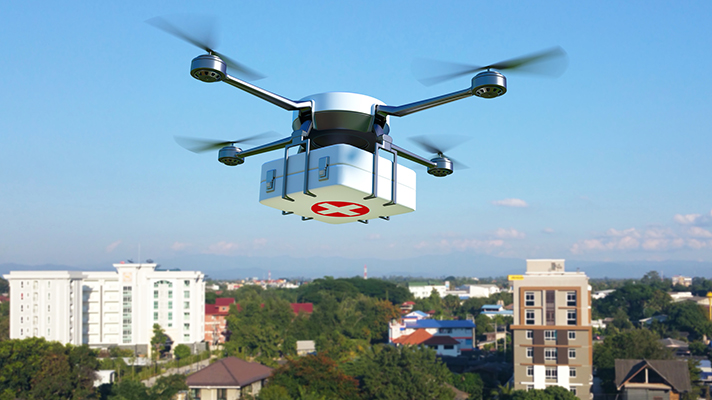
A UAV is not the case at all, it is an unmanned aerial vehicle operated by radio remote control equipment or its program control device. The drone can be commanded through the computer, the ground station, and the ground circuit without the remote control at all. Drones can fly thousands of kilometers away, and now the maximum time they can stay in the air is 48 hours, which is equivalent to two days. This is also an obvious feature of drones, which cannot be achieved by model aircraft.
2.Different flight control systems
Drones interact with ground control parameters through a complex central flight control system to control the attitude and maneuvering of the aircraft to achieve autonomous flight.
Although the aircraft model is also unmanned, the maneuvering and attitude adjustments are realized by the remote control of the operator within the sight range of the operator. That is to say, the drone itself is flying with a “brain”, which may be limited by artificial intelligence and not as smart as a human brain. But the “brain” of the model aircraft is always on the ground, in the hands of the operator.
3.Different automatic control systems
In terms of automatic control, the UAV can intelligently respond to various situations, request mission execution, perform data fusion and mission confirmation with the ground station, and request the next step of the operation.
However, the automatic control of most model airplanes can only realize automatic return after losing control.
4.Different composition systems
The aviation model consists of a flight platform, a power system, and a remote control system within visual range. It is mainly for the appreciation of the public, the pursuit of the real appearance or the elegance of the flight, etc., and the technological content is not high.
Drones are more complicated than model airplanes. The drone system is composed of a flight platform, a power system, a flight control navigation system, a link system, a mission system, and a ground station. It is mainly for the completion of specific tasks, the pursuit of the system’s ability to complete tasks, and high technological content. There is not much difference between some high-end aviation models and low-end drones in terms of flight platforms and power systems.
5.Different uses
Drones mostly perform long-distance missions and are currently mainly used in military and special civilian applications, with a maximum mission radius of tens of thousands of kilometers. It flies autonomously through the onboard navigation and flight control system. Upload control instructions and download task information through the link system.
Model airplanes usually fly within the visual range, and the control radius is less than 800 meters. The operator looks at the aircraft and controls the aircraft through the remote control transmitter in his hand. Generally, there is no mission equipment on the aircraft. Many drone systems also have the ability similar to model aircraft and can be directly controlled by remote control within the line of sight.