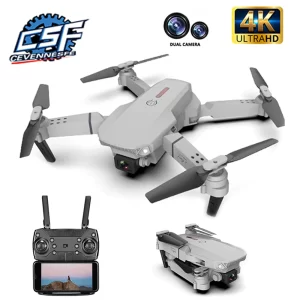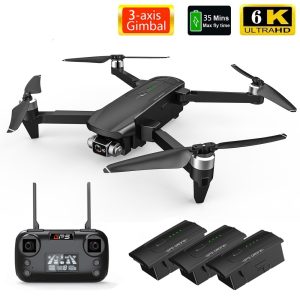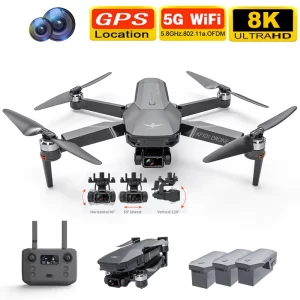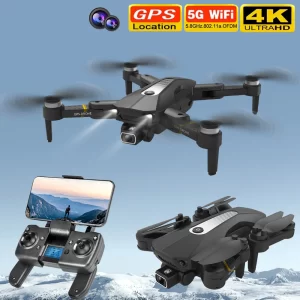
UAV is actually an unmanned aircraft, its appearance can be traced back to 1914. At the time, World War I was in full swing, and the British Institute of Military Aviation came up with a proposal to build drones. Since then, a large number of scientists have developed drones. There are many varieties of drones, the common ones are password drones, multi-function drones, artificial intelligence drones, long-term flying drones, etc. Let’s take a look at them together.
The main types of drones:
1.Cipher Drone
Cipher drones are mainly used to provide battlefield commanders with real-time information on the battlefield related to the progress of the battle. It has a very peculiar shape, resembling a bagel. The aircraft has a flight altitude of about 2,500 meters and a cruising radius of 30 kilometers. It is equipped with optical cameras, forward-looking infrared sensors, and other sensors that can perform military tasks. It is mainly responsible for the reconnaissance and search tasks of various enemy targets in the medium and low altitude range and can use the ground penetrating radar on the aircraft to detect the underground radar and other devices.
2.Multifunctional Drone
This kind of UAV will integrate reconnaissance, fire calibration, surveillance, result assessment, target identification, radio relay, ground attack, and other functions. It can carry out soft strikes such as harassment and decoy when it is far away from the enemy, and can also attack important targets on the ground when necessary.
3.Artificial Intelligence Drone
To make drones truly become air soldiers, foreign countries are actively developing artificial intelligence drones. For example, the “Seiken” observation and attack automatic aircraft of the British Seiken company can automatically judge the military value of the target while monitoring the target in the air. When it thinks the target is worth attacking, it will automatically adjust the flight status and launch a dive attack on the target accurately.
4.Long-term Flying Drone
In order to monitor the target for a long time, to make up for the short duration of the unmanned reconnaissance aircraft and the many voyages required for repeated reconnaissance of the same target, the long-term aerial flying drone came into being. For example, the microwave-powered UAV of Lockheed in the United States can fly at high altitudes for more than 60 days. The maximum battery life of a UAV that stays in the air for a long time can reach 1 year, and it can carry out continuous reconnaissance and surveillance on the target.
5.Anti-missile Drone
To deal with the increasing number of surface-to-surface tactical missile attacks, many countries are actively developing drones for intercepting missiles. The drone can destroy incoming missiles at a distance from the defended target.
6.Micro Drone
To further expand the use of drones, drones can directly provide real-time intelligence support for low-level combat units such as squads, platoons, and companies. This drone is about 2 meters long and weighs only a few kilograms. It can be launched by a single soldier launcher when in use. For example, the “Sky Ball” UAV being developed by Brandon Bray Aircraft Structure Company and Umbrella Wing Company of the United States has a maximum weight of only about 9 kilograms and a maximum air time of 2.5 hours. Launched and recovered on the field of 7m x 7m.
7.Air Combat Drone
To reduce the loss of manned aircraft in air combat, many countries are developing unmanned aerial vehicles for air-to-air engagements. Since the UAV is not limited by the pilot’s anti-overload capability when maneuvering, it can perform unconventional maneuvers during air combat, and can effectively evade high-speed attack weapons such as missiles. At the same time, due to the low probability of UAV being intercepted by enemy airborne radar, the loss in air combat is much lower than that of manned aircraft.
8.Mapping Drone
As a new type of remote sensing monitoring platform, drones have a high degree of intelligence in flight operations. It can fly autonomously and take pictures according to predetermined routes, and provide remote sensing monitoring data and low-altitude video monitoring in real-time. It has the characteristics of strong mobility, convenience, and low cost. The high-resolution remote sensing data obtained by it is widely used in sea area dynamic supervision, marine environment monitoring, resource protection, and other work.
9.Aerial Photography Drone
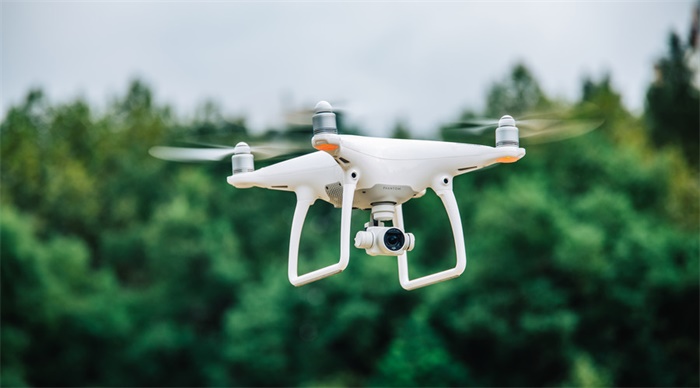
Aerial photography UAV is a remote control aircraft integrated with high-definition photography and camera devices. The flying height of aerial photography drones is generally more than 500 meters, which is suitable for film and television promotional films and aerial view shooting. This aircraft is flexible and convenient, and can quickly complete the shooting of the lens.
10.Stealth Drone
The stealth UAV can cruise for 8 hours at an altitude of 13,700, with an active radius of 1,800 kilometers and a cruising speed of 240 kilometers per hour. It can take off, automatically cruise, escape and land. It can also change its flight program mid-flight to perform new missions.