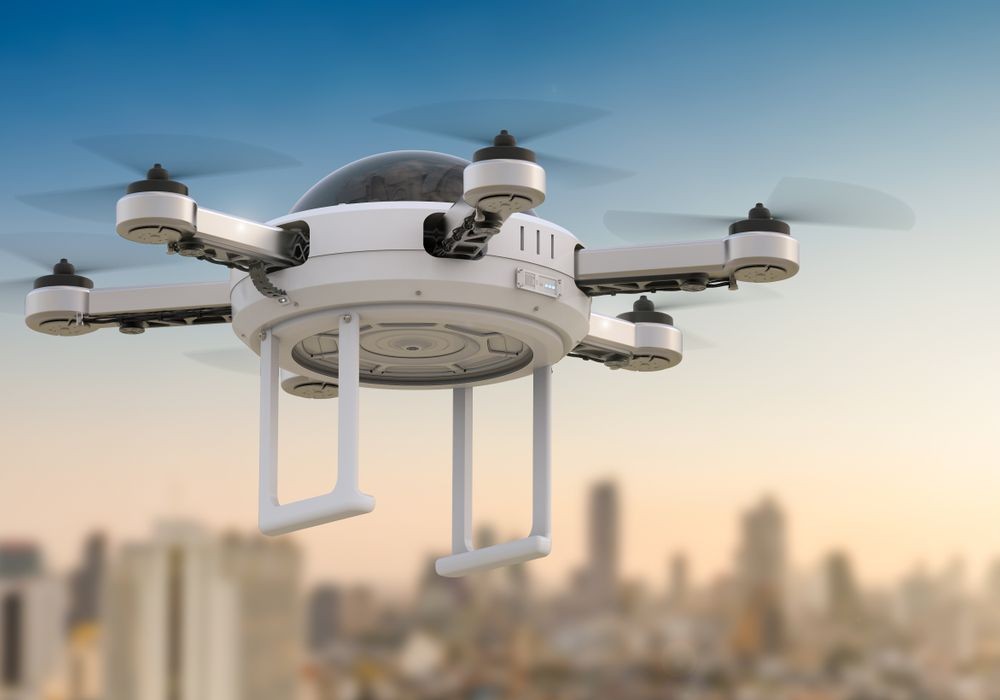
The history of unmanned aerial vehicles (UAVs), or drones, dates back to the early 20th century. However, it wasn’t until the mid-20th century that significant advancements in technology and military operations led to the development of modern-day UAVs. In this article, we will discuss the key milestones in the history of UAV development.
Early Development (1900s-1950s)
The first attempts at developing unmanned aircraft were made in the early 1900s, with the development of radio-controlled model airplanes. However, it wasn’t until the 1930s that the British Royal Navy began experimenting with radio-controlled aircraft for military purposes. In 1935, the Royal Navy successfully tested a remotely-controlled aircraft called the Queen Bee, which was used for target practice by naval gunners.
During World War II, UAVs were used for reconnaissance and target practice by both the Axis and Allied powers. The Germans developed the Fieseler Fi 103R, also known as the V-1 flying bomb, which was essentially a pilotless aircraft that was launched from a ramp and guided to its target by radio control. The United States developed the Radioplane OQ-2, a small, lightweight target drone that was used for anti-aircraft training.
Modern Era (1960s-1980s)
The 1960s marked the beginning of the modern era of UAV development, with the development of unmanned reconnaissance aircraft by the United States military. In 1962, the US Air Force began testing the Ryan Model 147 Lightning Bug, a small, jet-powered UAV that was used for reconnaissance missions over Vietnam.
In the 1970s, the US military continued to develop UAV technology, with the development of the Amber, Aquila, and Compass Arrow programs. These programs led to the development of the General Atomics MQ-1 Predator, which was first introduced in 1995 and is still in use today for reconnaissance and combat operations.
Recent Advancements (1990s-Present)
Since the 1990s, UAV technology has continued to advance rapidly, with significant advancements in both military and civilian applications. The US military has continued to invest heavily in UAV technology, with the development of the MQ-9 Reaper, an unmanned combat aerial vehicle that is capable of both reconnaissance and combat operations.
In addition to military applications, UAVs are increasingly being used in civilian applications such as surveying, agriculture, and search and rescue operations. The development of lightweight, high-quality cameras and other sensors has made UAVs an attractive option for these applications, as they are able to capture high-resolution images and data from difficult-to-reach locations.
One of the most significant recent advancements in UAV technology has been the development of autonomous flight systems, which allow UAVs to operate without direct human intervention. These systems use a combination of sensors, GPS, and other technologies to navigate and perform tasks autonomously, making them ideal for applications such as surveying, mapping, and monitoring of infrastructure.
Conclusion
In conclusion, the history of UAV development has been marked by significant advancements in technology and military operations. From the early experiments with radio-controlled model airplanes to the development of modern-day UAVs with autonomous flight systems, UAVs have become an essential tool for both military and civilian applications. As technology continues to advance, it’s likely that we will see even more innovative uses for UAVs in the future.