The integration of drones in agriculture has catalyzed a transformative shift in the way farming practices are conducted, offering unprecedented assistance and advancements that have revolutionized crop management, yield optimization, and environmental sustainability. From precision farming and crop monitoring to pesticide application and soil analysis, drones have emerged as indispensable tools for modern agriculture, empowering farmers to make data-driven decisions, maximize productivity, and minimize environmental impact.
Precision Farming and Crop Monitoring :
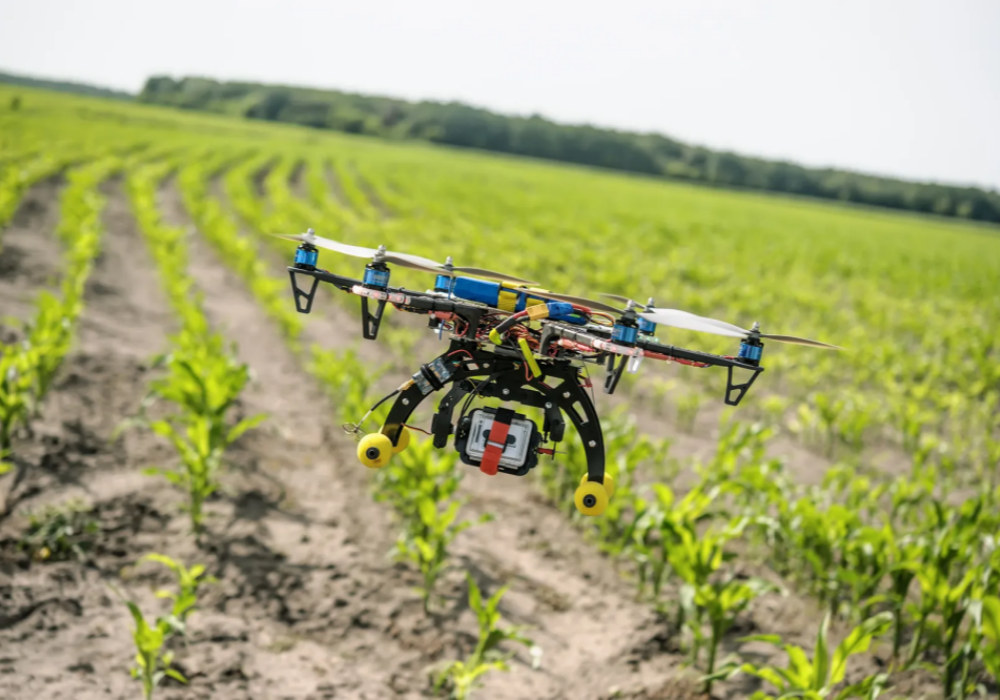
Drones have revolutionized precision farming and crop monitoring by providing farmers with real-time data on crop health, soil moisture levels, and yield estimations. Equipped with advanced sensors and imaging technologies, drones facilitate the identification of crop stress, nutrient deficiencies, and pest infestations, enabling farmers to implement targeted interventions and optimize resource allocation for enhanced crop productivity and quality.
Efficient Irrigation Management :
The use of drones for efficient irrigation management has facilitated the conservation of water resources and the optimization of irrigation practices in agriculture. By conducting aerial surveys and assessing soil moisture levels, drones enable farmers to implement precise irrigation strategies, minimizing water wastage and ensuring optimal hydration for crops, thereby fostering sustainable water management practices and enhancing agricultural sustainability.
Pest and Disease Control :
Drones have played a pivotal role in enhancing pest and disease control measures in agriculture, offering timely and targeted interventions for the prevention and management of crop diseases and infestations. Through the deployment of specialized sensors and imaging capabilities, drones facilitate the early detection of pests, diseases, and weed proliferation, enabling farmers to implement proactive control measures and minimize the use of chemical pesticides, thereby fostering environmentally friendly pest management practices.
Crop Dusting and Fertilizer Application :
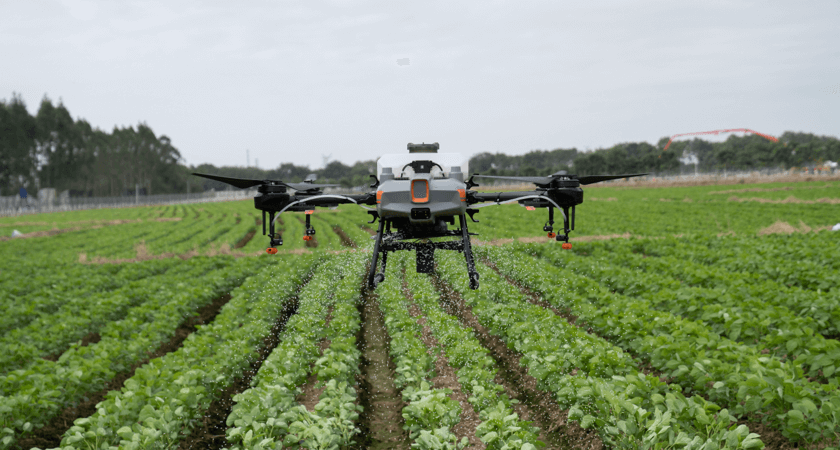
The integration of drones for crop dusting and fertilizer application has streamlined the process of nutrient distribution and pest control in agriculture. With their ability to access difficult terrain and execute precise spraying techniques, drones ensure uniform and efficient application of fertilizers and pesticides, reducing operational costs, minimizing chemical runoff, and promoting targeted and sustainable agricultural practices.
Land Surveying and Soil Analysis :
Drones have transformed land surveying and soil analysis processes in agriculture by providing farmers with comprehensive insights into soil composition, fertility levels, and land topography. By conducting aerial surveys and generating high-resolution maps, drones enable farmers to assess soil health, plan land use efficiently, and implement tailored cultivation practices that optimize land productivity and minimize environmental degradation.
Enhanced Data-Driven Decision-Making :
The integration of drones in agriculture has facilitated enhanced data-driven decision-making, empowering farmers to make informed choices based on comprehensive datasets and real-time environmental insights. By collecting and analyzing data on crop health, weather patterns, and environmental conditions, drones enable farmers to adopt proactive strategies, optimize resource allocation, and mitigate potential risks, thereby fostering operational efficiency and sustainable agricultural practices.
Remote Sensing and Crop Yield Estimation :
Commercial drones equipped with remote sensing technologies have enabled accurate crop yield estimation and forecasting in agriculture. By capturing multi-spectral imagery and monitoring crop development over time, drones facilitate precise yield estimations, enabling farmers to plan harvest schedules, assess market demands, and optimize supply chain management, thereby fostering efficient agricultural production and market competitiveness.
Promotion of Sustainable Farming Practices :
The adoption of drones in agriculture has promoted the adoption of sustainable farming practices, encouraging farmers to minimize environmental impact, conserve natural resources, and embrace eco-friendly cultivation methods. By facilitating precision farming, reducing chemical dependency, and optimizing resource utilization, drones contribute to the promotion of sustainable agriculture, fostering ecological balance and ensuring the long-term viability of farming practices for future generations.
The proliferation of drones in agriculture has ushered in a new era of technological innovation, operational efficiency, and environmental sustainability, transforming the agricultural landscape and empowering farmers to navigate the complexities of modern farming practices. From precision farming and efficient irrigation management to sustainable pest control and data-driven decision-making, drones continue to revolutionize the way agricultural operations are conducted, fostering productivity, resilience, and sustainability in the face of evolving global challenges. As the agricultural sector continues to embrace technological advancements, the future holds promising prospects for the widespread integration of drones, further solidifying their role as indispensable tools in the pursuit of sustainable and efficient agricultural practices that address the demands of a growing global population and ensure food security for generations to come.