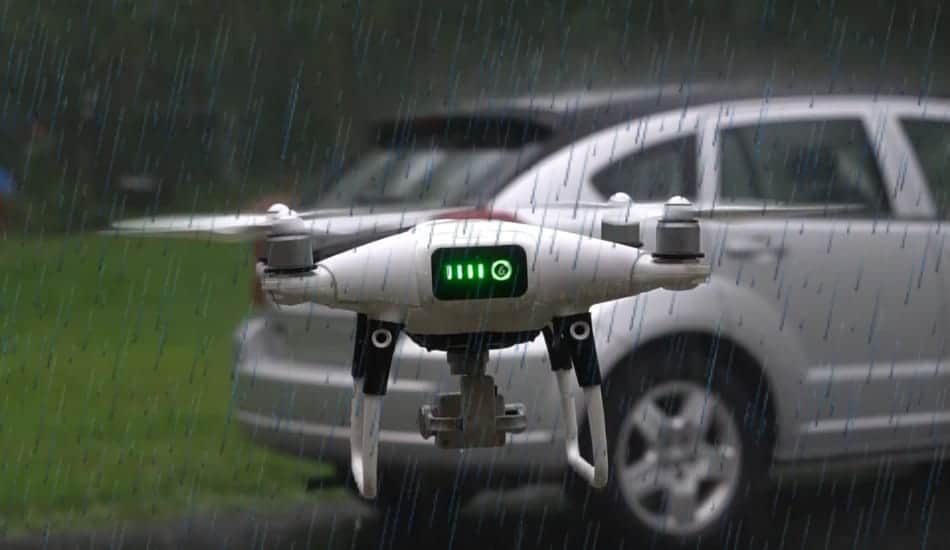
In recent years, the use of unmanned aerial vehicles (UAVs) has become increasingly popular in various industries. However, the weather conditions, such as rain and fog, can have a significant impact on the performance of UAVs. This article will explore the application of UAVs in rainy days and how they are used to overcome the challenges of adverse weather conditions.
Firstly, it is important to understand the impact of rain on UAVs. Rain can affect the visibility of the drone’s camera, making it difficult to navigate and capture clear images. Rain can also impact the drone’s stability and cause it to drift off course or even crash. However, with the advancement of technology, many commercial drones now come with features that enable them to fly in the rain.
One such feature is a waterproof coating, which can protect the drone from water damage. Waterproof drones are specifically designed to resist water penetration, making them suitable for use in rainy weather. Another feature is the use of anti-fogging technology, which prevents the camera lens from fogging up in humid conditions. This allows for clear and accurate images to be captured even in heavy rain.
Moreover, drones equipped with obstacle avoidance sensors and GPS technology can detect and avoid potential obstacles, even in poor weather conditions. This technology enables drones to navigate safely in rain and fog, reducing the risk of accidents and increasing the accuracy of data collection.
The use of UAVs in rainy weather has various applications in industries such as agriculture, infrastructure inspection, and search and rescue. In agriculture, UAVs can be used to assess crop health and yield. In rainy weather, UAVs can provide farmers with real-time data on crop health and growth, allowing them to make informed decisions about irrigation and fertilization.
In infrastructure inspection, UAVs can be used to assess the condition of roads, bridges, and buildings. In rainy weather, UAVs can provide valuable data on the condition of infrastructure, such as detecting water leaks or identifying potential areas of erosion.
In search and rescue operations, UAVs can be used to locate missing persons or assess the extent of a disaster. In rainy weather, UAVs equipped with thermal imaging cameras can locate individuals who may be lost or injured and require urgent assistance.
Despite the benefits of using UAVs in rainy weather, there are still some limitations to their use. Strong winds and heavy rain can still pose a significant challenge to UAVs, and operators must exercise caution when flying in adverse weather conditions. Moreover, operators must ensure that the drone’s batteries are fully charged before flying in the rain to avoid any electrical failures.
In conclusion, the application of UAVs in rainy weather is becoming increasingly popular in various industries due to the many benefits they provide. Waterproof coatings, anti-fogging technology, obstacle avoidance sensors, and GPS technology have enabled drones to fly safely and accurately in poor weather conditions. With the use of UAVs, industries can collect valuable data and make informed decisions, even in adverse weather conditions. However, operators must exercise caution and follow safety guidelines to avoid accidents and ensure the safe use of UAVs.