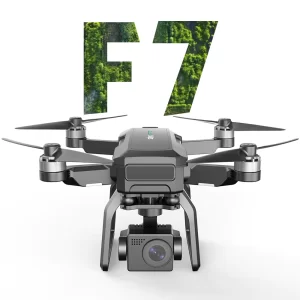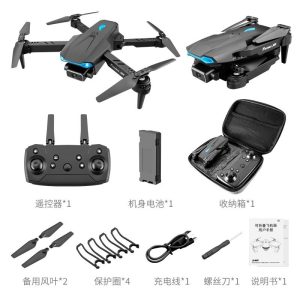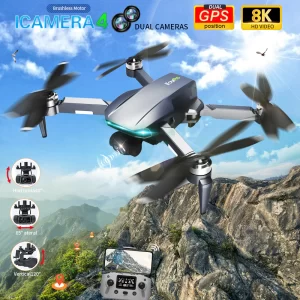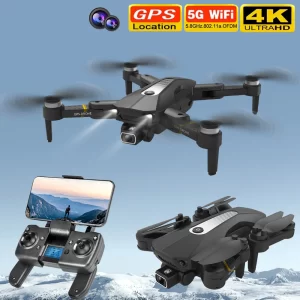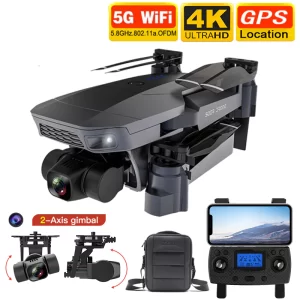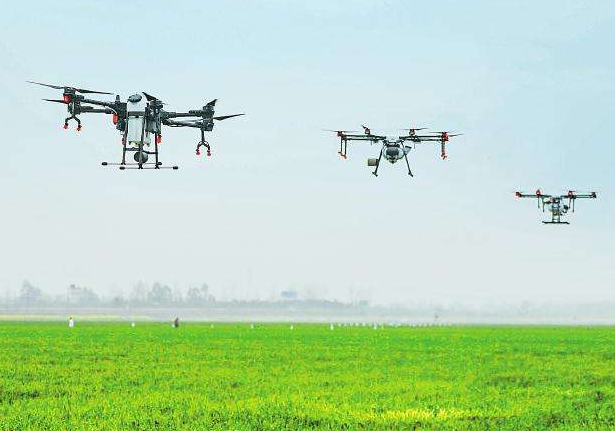
Drones, once only used in the military field, are now redefining precision agriculture. Today, the number of farmers using drones on their farms is steadily increasing. Various drones provide them with low-cost aerial camera platforms. This allows farmers to monitor crops cost-effectively.
At present, extreme weather conditions are increasing. With the growth of the world population comes a huge increase in the consumption of agricultural products. Given these circumstances, more and more farmers are expected to use drone technology. The use of drones in agriculture brings many benefits. But just like any other technology, drones have their pros and cons, which would-be buyers should be aware of before making a purchase.
The advantages of agricultural drones:
1.Agricultural Analysis
Drones can be used for soil and farmland analysis. With the help of drones, accurate three-dimensional maps can be generated for analysis of soil properties, soil moisture content, and soil erosion, which are very important for sowing in precision planting mode. Even after planting, the above information on field irrigation and management of nitrogen levels is very helpful.
2.Planting
At present, although drone planting is not yet common, some manufacturers have proposed systematic solutions, hoping to shoot warheads containing seeds and plant nutrients into the prepared farmland soil, which will greatly reduce planting costs.
3.Monitoring
One of the biggest hurdles in agricultural production is the inability to efficiently monitor crops in fields in large fields. This hurdle is made worse by the emergence of unpredictable weather patterns that lead to increased risk and maintenance costs. Drones can be used to make time-series animations showing accurate crop growth conditions, which can be used to display the precise growth process of crops and better manage crops. Drones can be used to make time-series animations showing accurate crop growth conditions, which can be used to display the precise growth process of crops and better manage crops.
4.Agricultural Spray
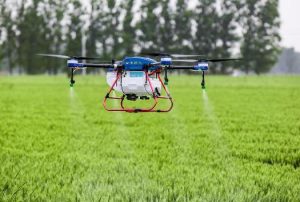
By using ultrasonic echoes and lasers, drones can adjust their flight altitude based on changes in terrain and geography. The ability of the drone to scan and adjust its distance from the ground allows the drone to evenly spray the correct amount of liquid in real-time. This increases efficiency and minimizes the dose that seeps into the groundwater. Spraying with drones has proven to be faster than other traditional methods.
5.Irrigation
Drones equipped with heat-sensitive, hyperspectral sensors can identify parts of fields that have become dry, which can help people irrigate timely and accurately in identified areas.
6.Health Assessment
Some drones can scan crops in visible and near-infrared light, while onboard light-processing equipment can identify the amount of green and near-infrared light reflected by plants. These data are then used to develop multispectral images depicting plant health. These images can be used to track the health of crops and suggest remedial action should any disease be detected. These images can be used to track the health of crops and suggest remedial action should any disease be detected.
7.Easy to Deploy
Unlike traditional aircraft, drones are easier and less expensive to deploy.
Disadvantages of agricultural drones:
1.Flight time and flight range.
There are also some problems with agricultural drones, most drones have short flight times, mostly between 20 minutes and an hour. Such flight time limits the area each flight battery can cover. The flight range also limits the radius that the drone can fly in a single sortie. And drones with longer flight times and larger flight radii are expensive.
2.The initial purchase cost.
Drones that can be used in agriculture are quite expensive. Fixed-wing drones currently cost as much as $25,000. Some drones include hardware, software, tools, and imaging sensors at hefty prices. Buying a drone without the associated equipment is cheap, but the high cost of a compliant camera and processing software makes the difference between the two little different. However, the price of purchasing a full set of agricultural drones in a short period is expensive, but it is worth it in the long run.
3.Interference in airspace.
Agricultural drones and manned aircraft share the same airspace and are vulnerable to interference from each other. Therefore, it is recommended to submit a flight plan to the local airport before using the drone.
4.It is greatly affected by the weather.
Unlike traditional aircraft, drones are more susceptible to climatic conditions. If it is windy or rainy outside, the drone will not be able to fly.
5.Knowledge and skills.
Images captured by drones require professionals to convert them into useful information, which means the average farmer may need to attend training or have to hire specialist analysis software people to help with image processing.
Drone technology is improving every day, and as more manufacturers enter the industry, the cost of drones and related equipment will decrease. Constraints such as flight time and range are expected to be addressed through technological improvements. This will allow farmers to gain more from drone use.