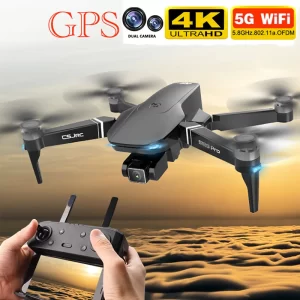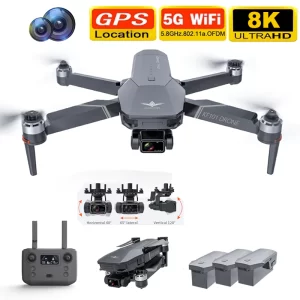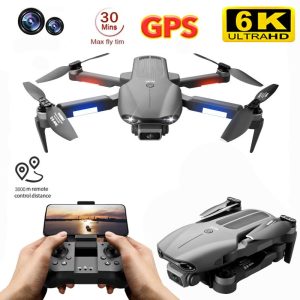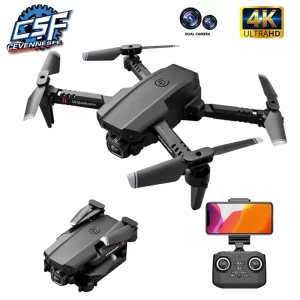
What are the uses of agricultural drones? Unmanned aerial vehicles, commonly known as drones, have been in commercial use since the 80s. Today, the practical application of drones is rapidly expanding in various industries. According to the latest assessment report, drones have made great contributions in many fields, and the contribution of drones to agricultural production has become increasingly prominent. Next, I will share with you the six major uses of agricultural drones!
Some data show that the earth’s total population will surge to 9 billion in 2050, and the demand for agricultural products will also increase by 70%. With the growing environmental problems, agricultural production faces more and more challenges. The powerful data collection and analysis functions of agricultural drones provide a strong technical guarantee for more scientific crop planting and protection. With the relaxation of drone control by various governments, more and more companies have increased their investment in agricultural drone research and development. Agricultural drones are bound to move further toward a highly intelligent and convenient application. At present, the application of drones in agricultural production has achieved initial results, which are mainly reflected in the following six aspects.
1.Plot and soil analysis
Agricultural drones equipped with high-definition cameras and advanced sensors can draw accurate three-dimensional maps of land plots and soil analysis, and develop detailed planning for planting, which plays a vital role in the initial stages of agricultural production. At the same time, agricultural drones of this type can also closely monitor the condition of the plot, providing powerful data support for later irrigation and soil nitrogen content management.
2.Aerial sowing
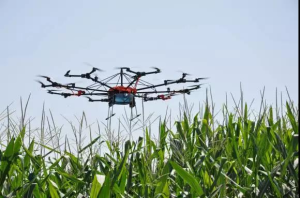
Scientists have developed a complete drone seeding system that simultaneously infuses the soil with seeds and all the nutrients they need to grow. This technology increases the nutrient absorption rate of seeds by 75% while reducing the cost of sowing by 85%. It not only ensures the survival rate of seeds but also relatively reduces the consumption of other resources, which can be described as killing two birds with one stone.
3.Spraying operation
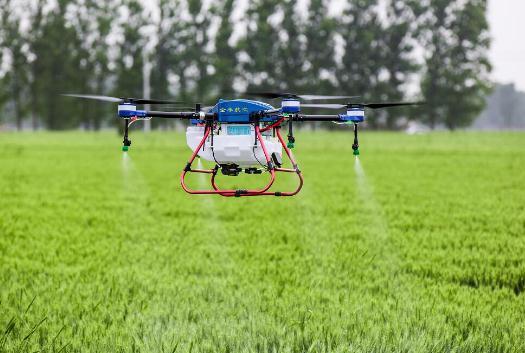
Agricultural drones equipped with ultrasonic, radar, and advanced spraying systems are widely used in plant protection operations and are also commonly known as plant protection drones. This type of UAV can continuously adjust the flight height according to the geographical terrain, identify and avoid obstacles autonomously, and rely on the advanced spraying system to carry out accurate and uniform spraying of crops. This technology greatly reduces the number of pesticides and reduces the pollution of plant protection operations to water bodies and the environment. Experts estimate that compared with traditional machinery, plant protection drones have up to five times the operational efficiency, which will greatly reduce the consumption of human and material resources.
4.Crop Monitoring
Large plots and inefficient crop monitoring are other major pain point in agricultural production. As global temperatures rise and climate change becomes increasingly erratic, it becomes increasingly difficult to manage and maintain land parcel conditions. In the past, farmers mainly relied on satellite images to assist crop monitoring, but the cost was too high and pre-purchased in advance, and the service efficiency of one piece per day was difficult to provide real-time and accurate crop monitoring information. Agricultural drones equipped with real-time imaging systems have emerged, providing farmers with a reliable and effective guarantee for more accurate monitoring of crop growth conditions and timely and effective prevention and control measures.
5.Agricultural irrigation
Agricultural drones equipped with hyperspectral, multispectral, and thermal sensors can accurately analyze and identify the arid areas of the plot, providing powerful data support for precision irrigation operations. In addition, during the growth of crops, this type of drone can also calculate the vegetation index, and analyze the density and health of crops through the heat emitted by the crops themselves.
6.Crop Health Assessment
Health assessment of crops and timely detection of pests and diseases is one of the necessary guarantees for high-quality agricultural production. By being equipped with visible infrared and near-infrared emission equipment, agricultural drones can accurately analyze the amount of green and near-infrared light reflected by crops and draw multi-spectral images to track changes and health conditions of crops. Farmers can make fast and effective prevention and control measures based on the corresponding data to protect crops from pests and diseases, thereby significantly improving the efficiency of agricultural production.
Do you know the six uses of agricultural drones now? At present, with the rapid growth of the global population and the continuous improvement of human demand for agricultural products, highly intelligent agricultural drones will play an increasingly important and indispensable role in future agricultural production.