In recent years, commercial drones have emerged as powerful tools in the realm of public safety, playing a crucial role in emergency response and search and rescue operations. Equipped with advanced technologies and capabilities, these unmanned aerial vehicles (UAVs) have revolutionized the way emergency situations are handled. This article explores the applications and benefits of commercial drones in public safety, highlighting their ability to enhance emergency response, improve situational awareness, and aid in search and rescue missions.
Rapid Assessment and Situational Awareness:
When time is of the essence, commercial drones can quickly provide crucial situational awareness to emergency responders. Equipped with high-resolution cameras and sensors, drones can swiftly assess disaster-affected areas, allowing emergency teams to gather critical information about the incident, identify hazards, and plan their response accordingly. Real-time aerial footage transmitted to ground control stations provides an invaluable perspective that aids in decision-making, resource allocation, and prioritizing rescue efforts.
Search and Rescue Operations:
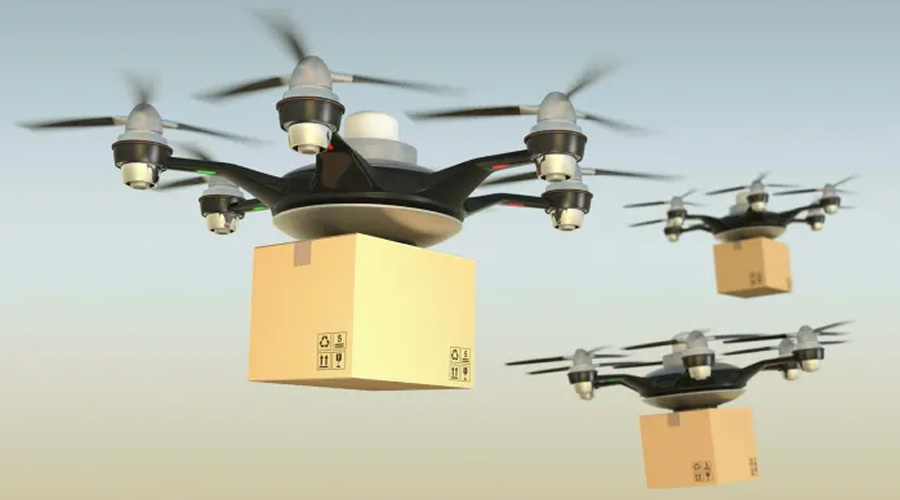
Commercial drones have become invaluable assets in search and rescue missions, particularly in challenging terrains or large areas that are difficult to access on foot. Equipped with thermal imaging cameras and advanced sensors, drones can locate missing persons or survivors by detecting body heat signatures even in low-light conditions. Their aerial vantage point and maneuverability enable them to cover vast areas quickly, reducing search time and increasing the chances of a successful rescue. In addition, drones can drop essential supplies, deliver communication devices, or establish temporary communication networks to facilitate coordination between search teams.
Hazardous Environment Monitoring:
During emergencies involving hazardous substances or environmental disasters, commercial drones play a vital role in monitoring and assessing potentially dangerous areas. Drones equipped with gas sensors, radiation detectors, or environmental monitoring devices can gather critical data without exposing human responders to unnecessary risks. This capability enables authorities to identify and mitigate environmental hazards promptly, ensuring the safety of both responders and affected communities.
Crowd Monitoring and Management:
In situations that require crowd management, such as large-scale events or public gatherings, commercial drones offer valuable assistance. By capturing aerial footage, drones provide real-time monitoring of crowd movements, identifying potential congestion points, and aiding in effective crowd control measures. This capability enhances public safety by preventing stampedes, identifying potential security threats, and enabling authorities to respond swiftly to any emergent situations.
Training and Simulation:
Commercial drones also serve as valuable tools for training and simulation exercises in public safety agencies. These UAVs allow responders to practice emergency scenarios, simulate complex rescue operations, and enhance coordination between different response teams. By incorporating drones into training programs, emergency personnel can familiarize themselves with drone capabilities, learn effective deployment strategies, and develop efficient communication protocols, ultimately improving their overall preparedness and response effectiveness.
Conclusion:
Commercial drones have become indispensable assets in enhancing public safety, particularly in emergency response and search and rescue operations. Their ability to rapidly assess situations, provide real-time situational awareness, and reach challenging or hazardous locations has transformed the effectiveness and efficiency of public safety efforts. As drone technology continues to advance, we can anticipate even more sophisticated capabilities and integration with artificial intelligence, enabling drones to autonomously navigate complex environments and support responders in saving lives and safeguarding communities. The future of public safety is undoubtedly elevated by the wings of these remarkable unmanned aerial vehicles.